Agents That Turn Parking Lots Into Sales Outreach
Appell Striping uses agents to find prospects, show the work, prepare outreach, and handle the jobs that follow.

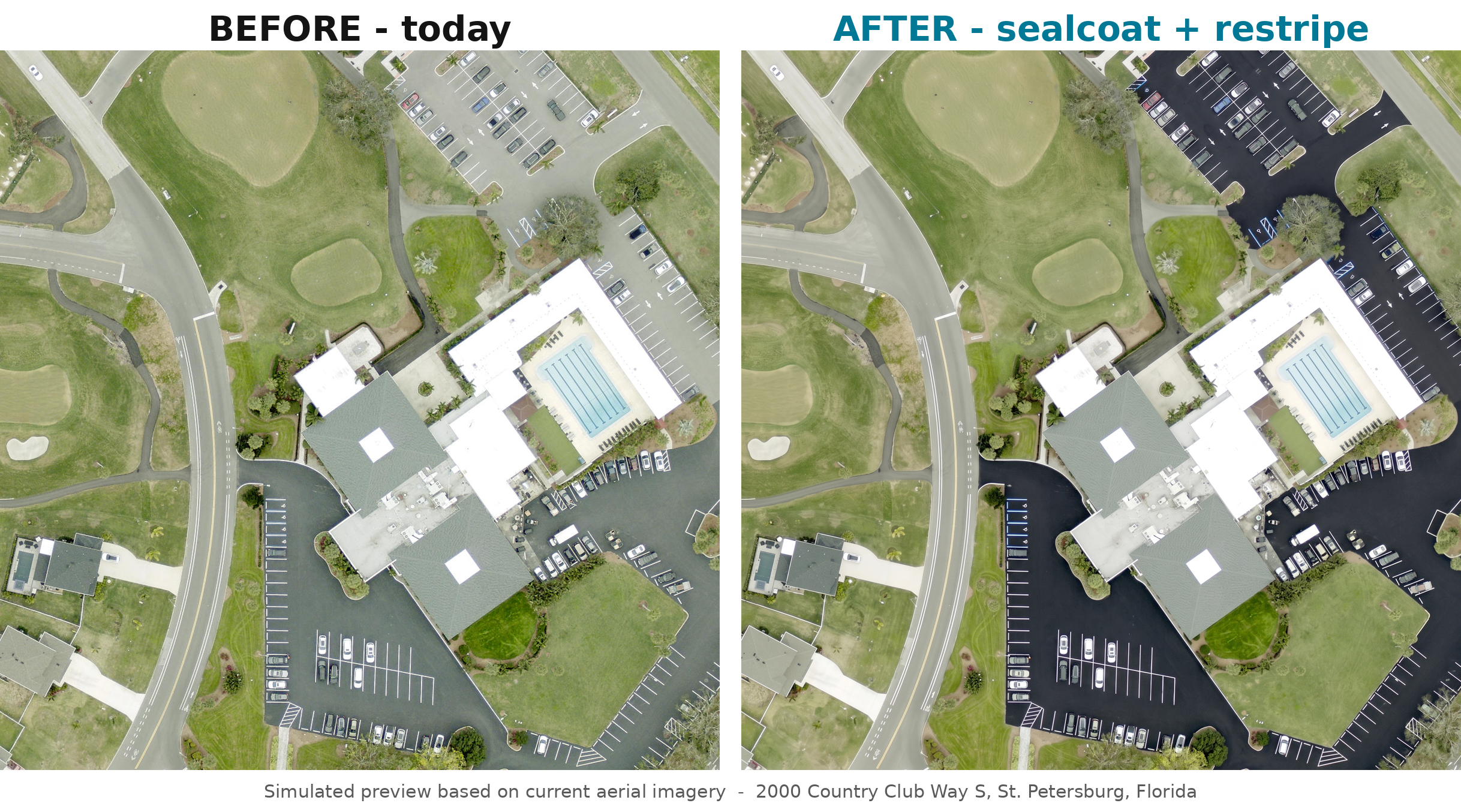
Michael Appell employed a team of agents that find potential customers, pull aerial images of parking lots, create simulated before-and-afters, and prepare a branded email for each property.
A prospect doesn't get a generic pitch. They get a picture of what fresh sealcoating and striping could look like on their own lot.
Appell Striping and Seal Coating is a 26-year-old Long Island business with more than $10 million in annual revenue. It stripes and sealcoats parking lots, serves national accounts, and is growing through franchising.
He brought prospecting in-house
Michael used to pay outside services between $1,500 to $4,500 a month to find new customers. He says promised meetings often failed to materialize, and he had little visibility into what was working.
So he assembled a team of agents to pitch and prospect for him.
One agent looks for owners and property managers Appell can realistically reach. It skips corporate accounts where a local email is unlikely to reach the buyer, a distinction Michael says he never told it to make.
Another agent pulls recent aerial imagery and creates the simulated before-and-after. The next prepares a branded email for that property.
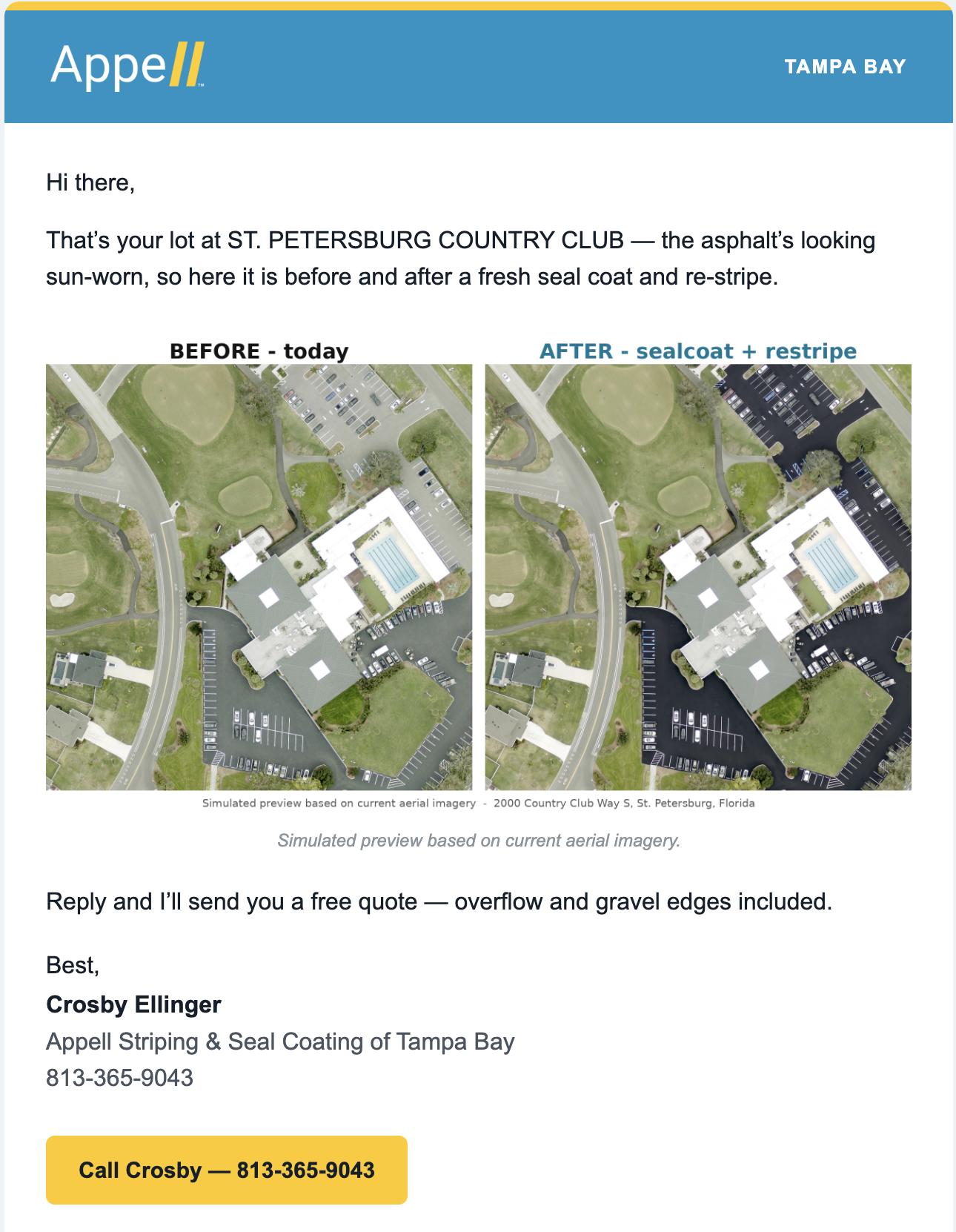
The first sample was small but promising. From roughly 40 emails, Michael had two or three hot leads. One prospect replied in about 90 minutes and asked Appell to prepare an estimate.
Scope the lot, then price the job
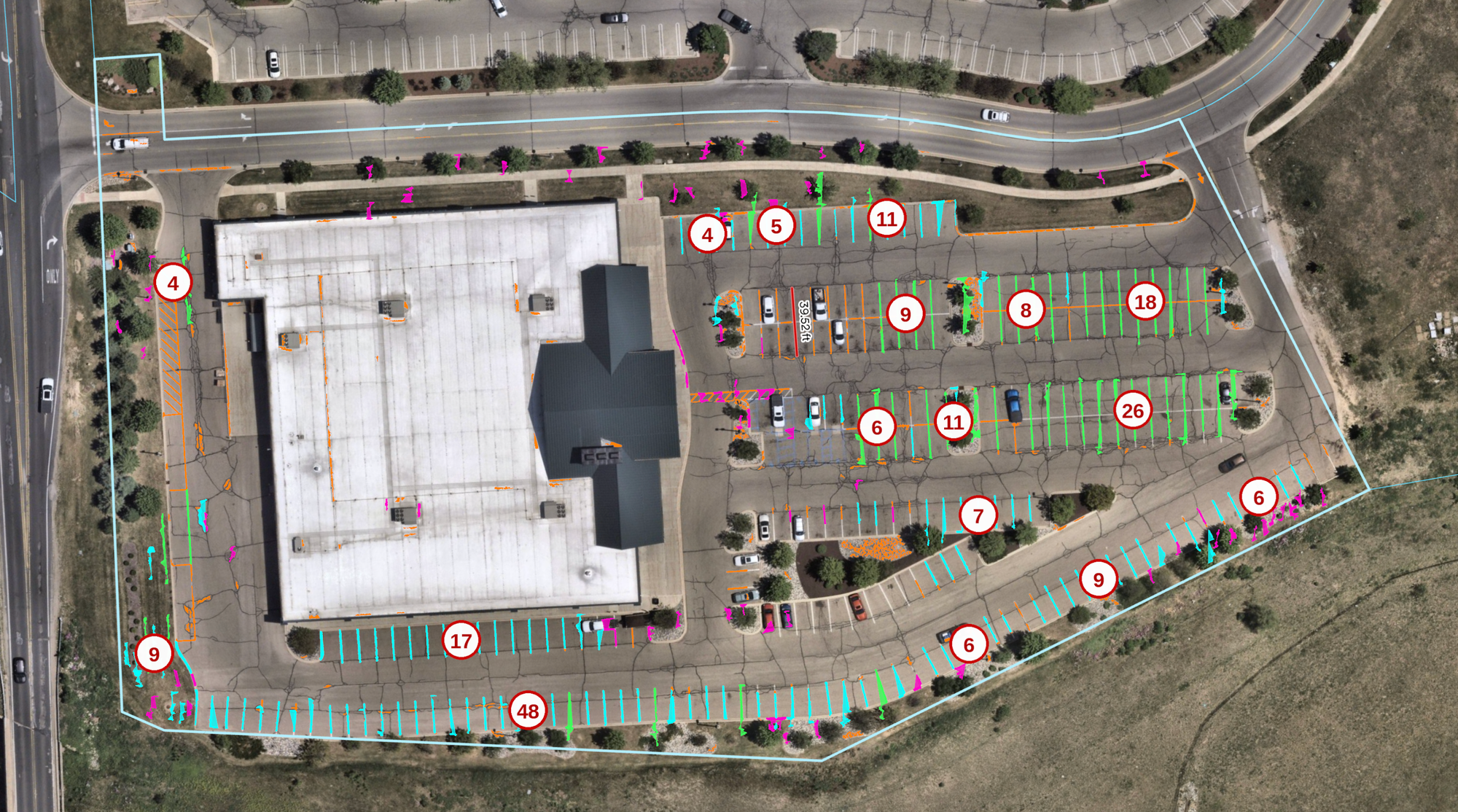
Michael’s newest agent looks at the same aerial imagery and counts parking stalls, directional arrows, accessible spaces, and other markings Appell would need to paint.
The goal is to give franchisees a faster starting point for an estimate instead of making them count every marking by hand.
Michael also built a pricing calculator in Hyperagent. Franchisees enter the job details, and the calculator returns a pricing estimate based on Appell’s history with 2,500 subcontractors, adjusted for the franchisee’s local market.
What once required a 30-to-40-minute phone call with Michael and his brother now takes three or four minutes.
Agents keep each work order moving
More than 100 work orders can hit Michael's team in a busy week. Each one used to start the same office job: read the request, decide whether Appell should take it, find local subcontractors, ask for quotes, follow up, and keep checking the inbox.
Michael built an agent to move that work from intake to a subcontractor quote ready for review.
“A job like that would probably take 4 to 6 hours from start to finish. A human's now worked on that for about 10 minutes.'”
Michael Apell, Co-Owner of Appell Striping & Seal Coating
The intake agent begins a process Michael describes as eight or nine steps long:
- Reads a work order when it arrives
- Flags requests that are not parking-lot work
- Recommends five or six subcontractors based on Appell's history
- Sends quote requests and watch the inbox for replies
- Tags the coordinator when a quote is ready to review
“The agent even says, 'Hey, this isn't parking lot work, so tell me if you want to accept this.'”
Michael Apell, Co-Owner of Appell Striping & Seal Coating
Appell's people review the quote, schedule the job, and make the final customer call. The agents handle the searching, sending, checking, and following up that gets the work there.
Now, new work orders can start moving after hours, on weekends, and even over holidays.
Build one job, then the next
Michael had never coded. He learned to build agents by waking up early and watching YouTube before work.
His first build was the intake agent. He tested it for 30 days before rolling it out to customers. When it held up, he added the next step.
That is still how he builds. Start with a job Appell already needs done. Check the work. Add another agent when the handoff is clear.
Those figures show how much the business grew. They do not isolate how much of that growth came from agents.
What Michael can attribute directly is the work they now carry and the time his team gets back. He spends less of his day keeping routine jobs from stalling and more time into landing larger accounts.
Prepare the next account. Serve the one you just won.
Michael's agents now work on both sides of the business.
Some find potential customers and turn their properties into tailored outreach. Others take incoming work, find subcontractors, request quotes, and bring the coordinator in when a quote is ready.
Michael's advice to other owners is simple: start with one painful job, especially one that gets in the way of serving customers you already have. Make it work. Then build the next handoff.